






From jamón and garlic shrimp to paella — rethinking what Tapas really means
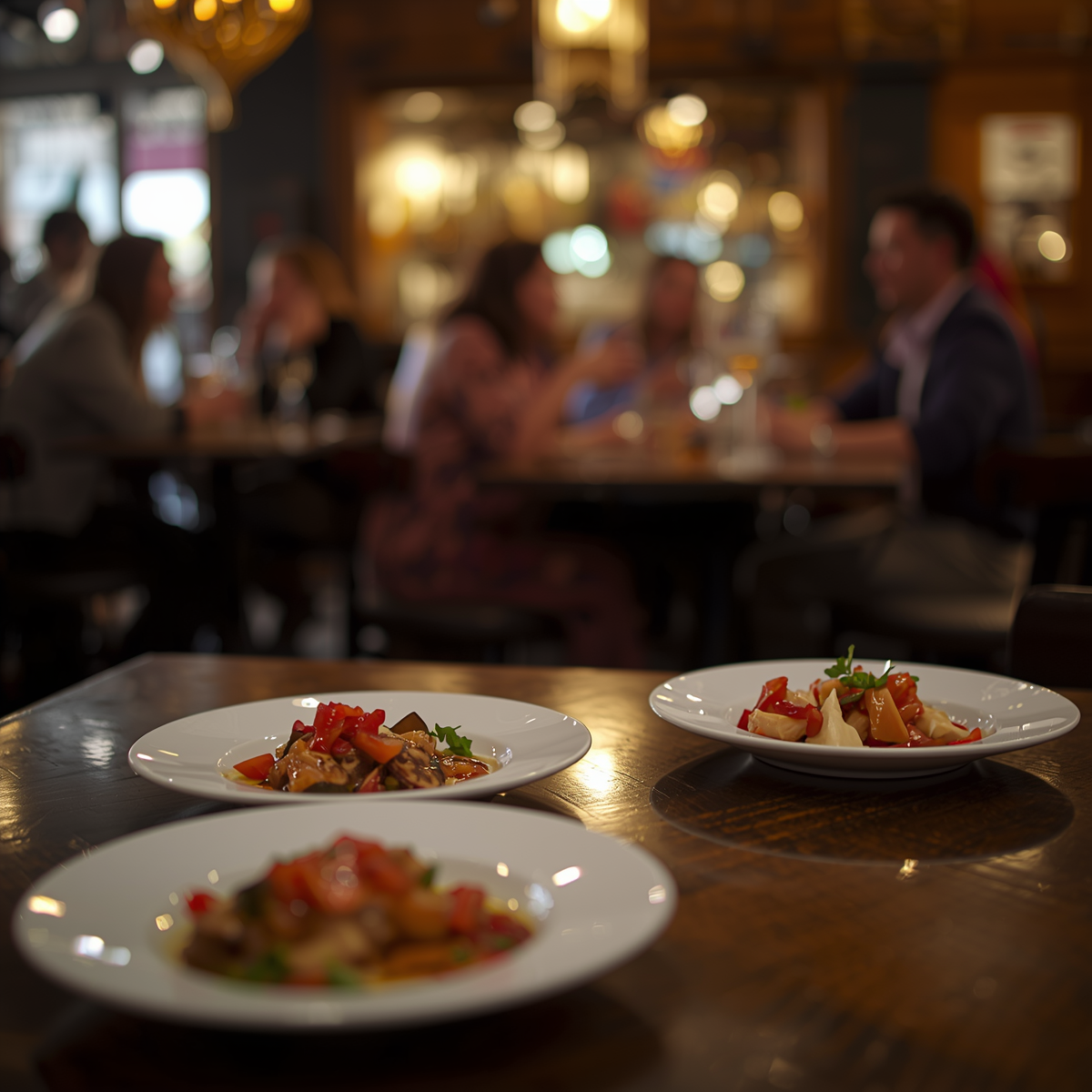
For many people, their first experience with Tapas happens in a beautifully designed restaurant.
Small plates arrive one after another — carefully plated, perfectly portioned, looking like a curated collection of miniature dishes.
But if you actually spend time in Spain, you slowly begin to notice something:
Many of the dishes people think of as “classic Tapas” are not all that representative of everyday Spain.
Tapas Is Not a Dish
One of the biggest misunderstandings about Tapas is treating it like the name of a specific food.
In Spain, it’s much closer to a way of eating.
Tapas is not a single dish, but a rhythm:
ordering several things, sharing them, eating slowly while talking — sometimes without even sitting down.
Sometimes, you order only a drink and a small bite simply appears alongside it.
👉 The point was never what you eat.
It’s how a night begins.
Why Is Ham Always Part of Tapas?
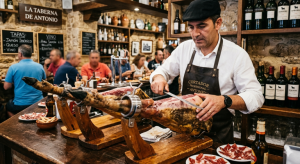
If you look at the counters of Spanish bars, there’s one thing you’ll almost always find: cured ham, or Jamón.
But there’s something many people outside Spain don’t realize:
👉 Most bars are not serving Ibérico ham. They’re serving Jamón Serrano.
While Ibérico is internationally famous for its rich flavor and premium price, Serrano is what truly supports everyday Tapas culture — more accessible, more casual, and more suited to daily life.
The reasons are surprisingly practical.
First, it requires no cooking. Slice it, plate it, serve it.
Second, its saltiness and balanced fat naturally complement drinks, especially sherry.
And unlike hot dishes, it doesn’t need to be eaten immediately. It can stay on the table throughout the conversation.
👉 It became a classic not because it was luxurious, but because it fit the moment perfectly.
How Can a Plate of Garlic Shrimp Represent an Entire Food Culture?
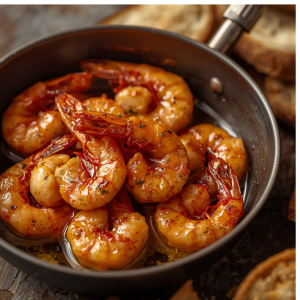
Gambas al ajillo — garlic shrimp cooked in olive oil — is probably one of the most iconic Tapas dishes in the world.
But the true star of the dish isn’t the shrimp or even the garlic.
It’s the olive oil.
Spain is one of the world’s largest olive oil producers, and its high-quality extra virgin olive oils consistently rank among the best globally. That means a dish that appears simple is actually built on very high standards.
The olive oil is not just a cooking medium — it carries the aroma of the garlic, chili, and shrimp together.
And the fewer ingredients a dish has, the more obvious quality becomes. The freshness of the shrimp and the quality of the oil are impossible to hide.
Even after the shrimp is gone, the oil remains in the plate, waiting for bread to soak it up. The flavor — and the conversation — continues.
👉 The dish became iconic not because it is complicated, but because it treats ingredients with complete directness.
What About Paella? Is It Tapas?
People often group paella together with Tapas, but technically, paella is not Tapas at all.
Paella is a main dish.
It takes time to prepare and is usually served as a large shared pan, rather than as small plates ordered throughout the evening.
So why are they constantly associated together?
Because outside Spain, they are often simplified into a single category called “Spanish food.”
It’s similar to how sushi and ramen are treated abroad:
in Japan, they don’t necessarily belong to the same dining occasion, but overseas they often appear side by side on the same menu.
Tapas Doesn’t Have Just One Form
Travel across Spain, and Tapas starts to change.
In the Basque Country in the north, you’ll find Pintxos — smaller, more refined bites often secured with toothpicks.
In Andalusia in the south, Tapas tends to feel more relaxed, heartier, and closer to everyday life.
Madrid blends tradition and modernity, creating perhaps the widest variety of styles.
👉 Tapas is not a cuisine.
It’s a framework.
Tapas Is Actually a Culture of Blending
Southern Spain was heavily influenced for centuries by Moorish (North African and Arab) culture, and traces of that influence still remain in Tapas today.
You can see it in the use of spices, the balance of sweet and savory flavors, and even frying techniques.
👉 Tapas is not a “pure tradition.”
It is a lifestyle shaped slowly through centuries of cultural mixing.
In the End, the Food Isn’t the Most Important Part
If you strip away all the details, the essence of Tapas is not ham, garlic shrimp, or any specific dish.
It comes down to three things:
- Small portions, so you can order more than one thing
- A slower rhythm that doesn’t end too quickly
- Freedom — standing, moving, continuing from one bar to another
👉 At its core, Tapas exists to make a night last a little longer.
🍽 A Small Tapas-Inspired Table Idea
If you want to recreate the feeling of Tapas at home, it can be surprisingly simple:
- One room-temperature dish (like ham or cheese)
- One warm dish (such as garlic shrimp or a simple grilled item)
- A basket of bread to extend the flavors
- A wine that’s easy to drink slowly
👉 The goal is not to complete a menu.
It’s to extend the rhythm of the evening.



 No Alcohol